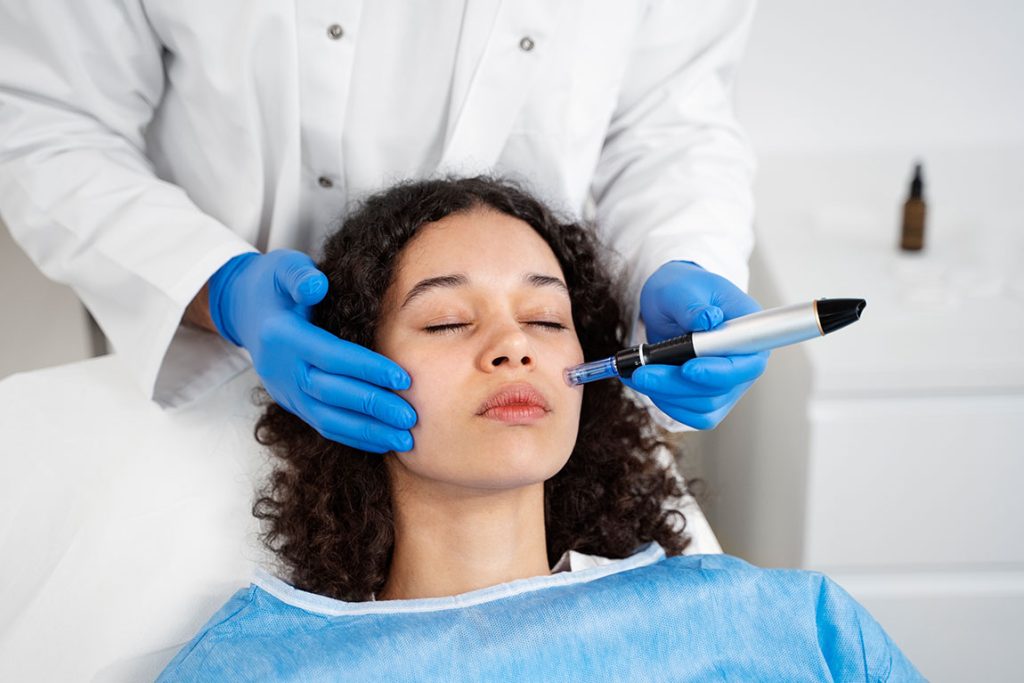
RF microneedling is a treatment many people try when creams and home devices have not softened acne scars or stretch marks. The idea sounds technical, but the process is straightforward. Very fine needles make tiny, controlled channels in the skin while a gentle radiofrequency (RF) current warms the deeper layer. That heat nudges your cells to build new collagen and elastin. Over time, the surface can look smoother and evener. In this guide, you’ll learn how RF microneedling works, why it can help acne scars and stretch marks, what a session feels like, and how long results take. You’ll also get clear safety tips, signs you’re a good candidate, and practical points about time and cost.
RF Microneedling Basics
RF microneedling uses a small tip packed with sterile needles. With each pulse, the needles enter at a set depth—often 0.5 to 3.5 mm—while RF energy warms the tissue beneath the surface. The heat focuses on the dermis, where scars and stretch marks sit. Brief temperatures around 60–70°C can tighten existing collagen and signal fibroblasts to make fresh fibers. Because energy is delivered in many tiny points (a fractional pattern), nearby skin stays intact and helps the treated spots heal faster. The controlled micro-injury plus heat is the key pair: needles create precise channels for remodeling, and RF adds uniform warmth that supports thicker, stronger collagen. This combo can give a smooth texture without removing the top layer, the way some lasers do.
Why Acne Scars Persist
After the inflamed acne settles, the skin may heal with pits or dips. Common types include icepick, boxcar, and rolling scars. These marks form when collagen breaks down and the deeper “scaffold” loses its shape. Creams often fail because the problem sits millimeters below the surface. RF microneedling reaches that layer. The needles create vertical channels that help release tight scar bands. Short bursts of heat encourage new collagen and elastin to fill in the gaps. Over several sessions, the dermis becomes more even and stable, softening hard edges and reducing shadowing. Rolling and shallow boxcar scars usually respond best. Icepick scars are deeper and may still need spot treatments such as TCA CROSS or a tiny punch procedure, often combined with RF sessions.
Stretch Marks Explained
Stretch marks, or striae, appear when skin expands faster than its support network can grow. Early marks (striae rubra) look pink or purple and may feel slightly raised. Later marks (striae alba) turn pale and feel thin or depressed. Under a microscope, you’d see gaps and disrupted collagen and elastin in the dermis. RF microneedling sends energy into this weakened layer to build new fibers, thicken tissue, and improve elasticity. Results vary by stage: early red or purple marks tend to respond more than older white lines. While the treatment won’t erase stretch marks, it can make them narrower, flatter, and closer in tone to nearby skin. Many people also notice the skin feels firmer and less “crepey” after a series.
What A Session Involves
Most visits follow a simple routine:
- Cleanse, photos, and numbing cream for about 20–40 minutes.
- Needle depth and energy are set for the area, as well as skin tone; cheeks usually use deeper settings than the forehead.
- Multiple passes are placed in a grid, with extra attention on thicker scars or lines.
- Cooling gel and sunscreen are applied before you leave.
You’ll feel warmth, pressure, and quick taps. Expect pinpoint redness and tiny dots where the needles entered. Small scabs can form and flake off in a few days. Makeup is usually fine the next day if the skin is calm. Plan for 24–48 hours of social downtime as pinkness fades. Body areas may feel tender for a bit longer; loose clothing and gentle washing help during the first days.
Settings That Matter
Great outcomes depend on thoughtful settings. Insulated needles release heat only at the tip, which helps protect the surface and can be useful for deeper skin tones. Non-insulated needles are warm along the shaft and may be chosen for thicker scars. Depth guides targeting: about 0.5–1.0 mm for thin areas like the forehead, 1.5–2.5 mm for cheeks, and up to 3.5 mm on the body. Higher energy and more passes strengthen collagen signals—but they also increase redness and swelling time. Many devices set a short “dwell time” so heat spreads evenly without harming the top layer. Spacing treatments four to six weeks apart gives collagen time to grow between sessions. Photos and honest notes after each visit help fine-tune your next settings.
Results You Can Expect
Collagen grows slowly, so change builds over weeks, not overnight. Most people book three to four sessions, spaced four to six weeks apart. Early gains often show by week four: a smoother feel, softer edges around scars, and a tighter look near pores. Remodeling continues for three to six months after the final visit as new fibers mature. Many see acne scars improve by roughly one to two grades on simple clinical scales. Stretch marks often narrow, sink less, and blend better with nearby skin. Expectations matter: deep icepick scars or very old striae may need mixed methods for the best outcome. Good sunscreen and gentle skincare protect your progress and reduce the chance of discoloration while you heal.
Safety, Risks, Aftercare
RF microneedling is considered safe with trained providers, but every procedure carries risks. Short-term effects include redness, warmth, swelling, and pinpoint crusting. Less common issues include temporary darkening (post-inflammatory hyperpigmentation), small bruises, or rare infection. Support healing with:
- A mild cleanser and simple moisturizer to protect the skin barrier.
- No scrubs, retinoids, or acids for several days.
- Daily sunscreen; sun exposure can worsen discoloration.
- Skipping hot tubs and intense workouts for 24 hours.
You may not be a candidate if you are pregnant, have a pacemaker, have active acne or skin infection, or have a strong tendency for keloids. Share your medical history and any recent isotretinoin use. Good prep and aftercare go a long way toward smooth, even results.
Who Benefits The Most
The best candidates have shallow to moderate acne scars or stretch marks and realistic goals. Rolling and softer boxcar scars tend to respond more than deep icepick scars. Early, reddish stretch marks change more than older white ones. Many darker skin tones do well because RF targets the dermis rather than pigment, though careful settings and sun care remain important. Results can improve when methods are combined:
- Subcision to release tight scar bands.
- Small filler droplets to lift select scars.
- TCA CROSS for stubborn icepick scars.
- Light resurfacing or peels later for tone and pores.
A good plan picks the right tools for the right mark and spaces them to support steady, safe healing.
Cost, Time, and Value
Time and pricing vary by area and device. A small zone, like the cheeks, takes less time than the full face or abdomen. Most visits run 45–90 minutes, including numbing. Many people choose a three- or four-session package. Value is not only the machine; it also comes from skill, smart settings, and clear aftercare. Before you start, ask:
- How many sessions fit my goals and skin type?
- What downtime should I expect for face vs. body?
- How do you adjust energy and depth for scars or striae?
- What is the plan if a few spots need extra attention?
Photos, honest progress checks, and sunscreen habits help you protect your investment and track real-world change.
Closing Thoughts and CTA
RF microneedling can help with acne scars and stretch marks by reaching the deeper layer where the problem sits and encouraging your skin to rebuild. It is not a quick fix, but with a short series and good aftercare, texture often looks smoother, more even, and more confident-making. The best results come from careful settings, sun protection, and a plan that fits your routine. Ready to explore your options with a friendly expert? Book a consultation to review your history, photos, and timeline—and leave with clear next steps from Atlanta Laser Lofts.